


Pivoting to a walkie-talkie app and hypothesis validation
When I first joined Teracy, my role was to improve the UI quickly.
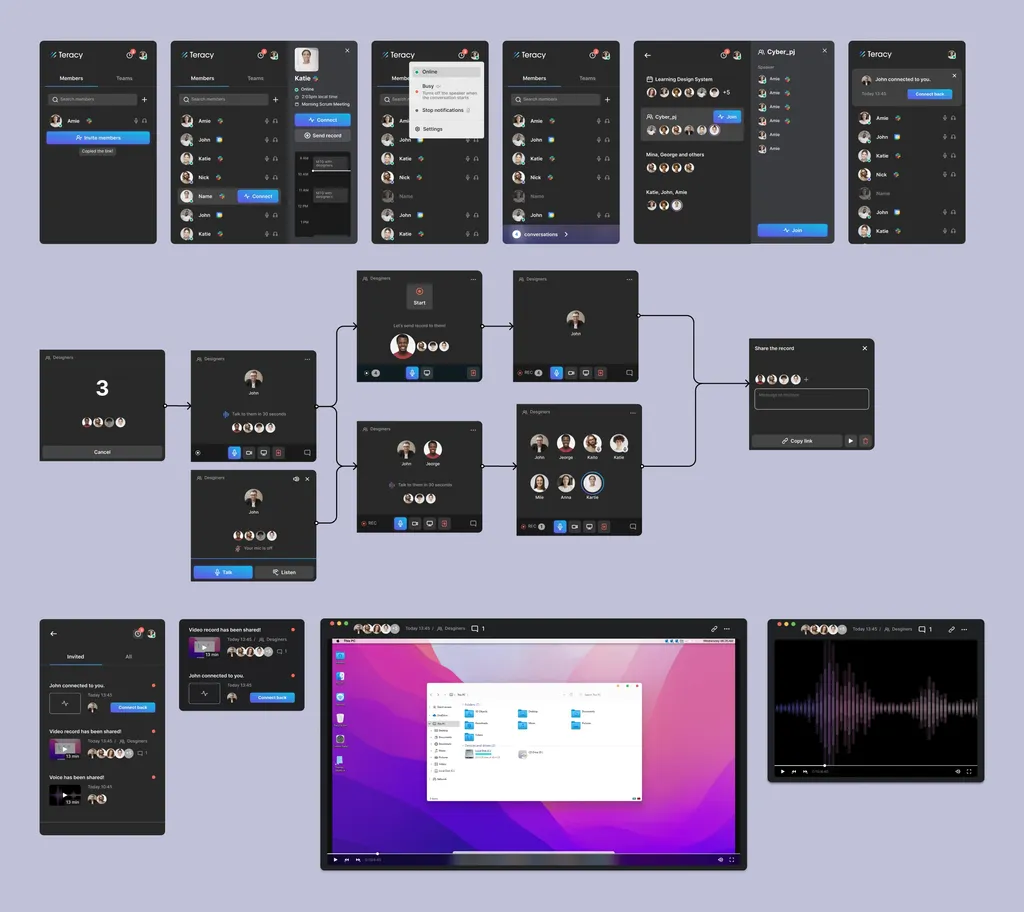
At that time, the product had many features: a Discord-like menu on the left and a Zoom-like interface on the right.
When the CEO traveled to the U.S., he realized that the product had become too complex and difficult to describe in a single sentence.
This experience led us to pivot toward simplifying and clarifying the core value of the product.
Pivoting to a minimal desktop app focused on “being able to talk instantly”
Creating a walkie-talkie–like prototype that connects immediately, built within three business days
Conducting user interviews during implementation to validate assumptions, sometimes using videos to clearly convey the concept
User feedback was often along the lines of “this seems convenient if it existed,” but it did not strongly resonate at a deeper level.
Through these interviews, we gained a key insight: the core issue for remote workers might not be communication efficiency, but loneliness — and the importance of “feeling that teammates are there.”
This insight led us to shift direction toward a product that evokes conversation and presence.

Pivoting to a smart metaverse and hypothesis validation
At the time, web-based virtual offices such as SpatialChat already existed.
We decided to embed it into a desktop app and conduct dogfooding within the team using that prototype.
Through this process, we felt strong potential in a virtual office that allows teammates to connect instantly from a desktop app.
The same instant, walkie-talkie–like speed of starting conversations
A smart experience that can be launched via shortcuts on a small screen
Backgrounds generated using image-generation AI
We gradually incorporated these values and preferences into the product.
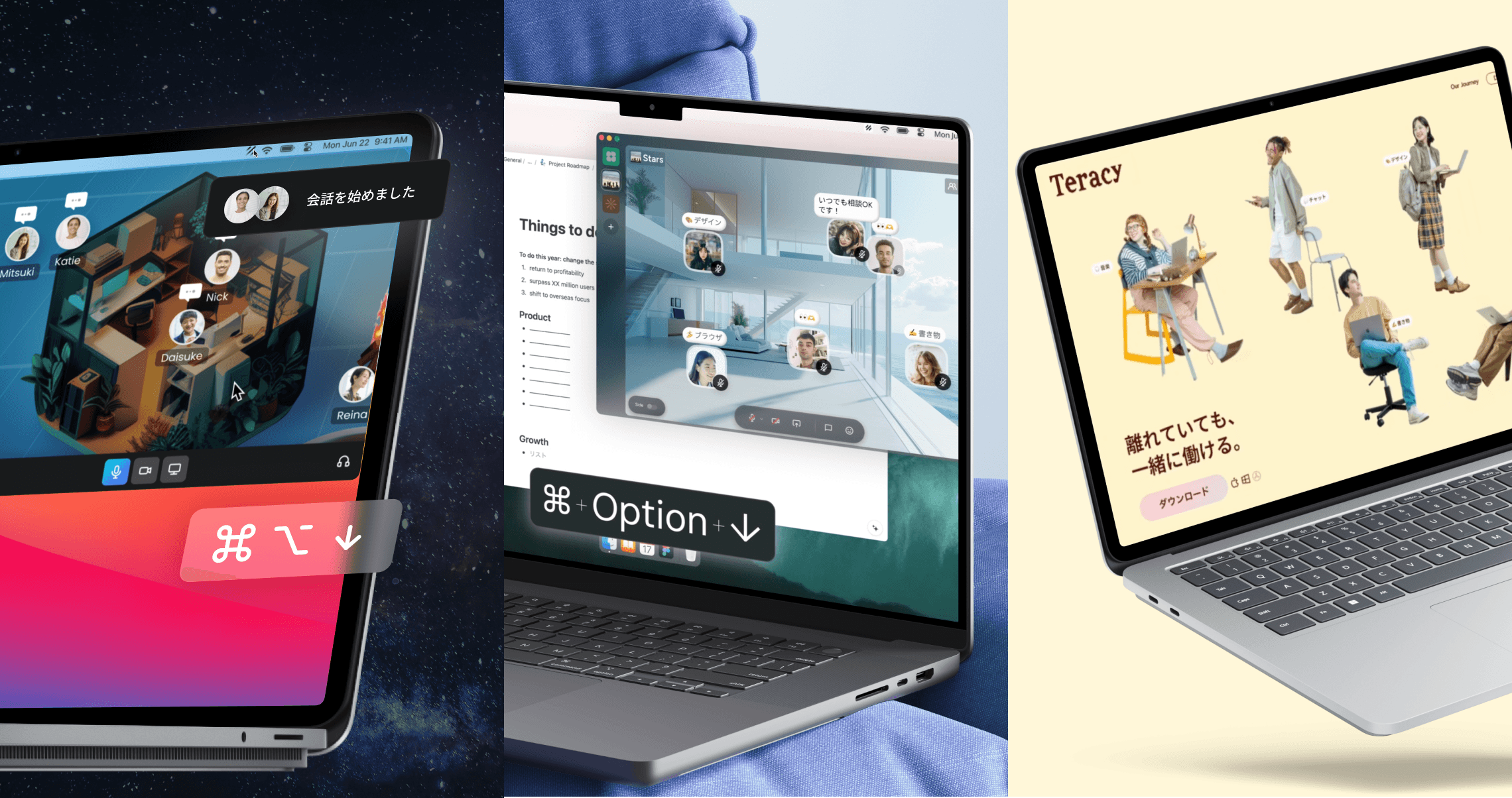
In parallel, I created promotional videos, landing pages, and logos to build recognition and trust.

The logo was designed around the concept of a smart tool that “warps” users between workspaces and imaginative spaces.

Meeting room backgrounds generated using image-generation AI

Shifting toward a more human-centered UX
While providing the product to users and collecting feedback, we continued refining the experience to help users feel a stronger sense of presence and companionship, while moving away from an overly “smart” or mechanical tone toward something more human.
Insights
Although we initially believed users would value a compact screen, many ended up expanding the app to larger screen sizes
Initiating conversations still felt difficult for some users
Initiatives
A side mode designed to be easy to use during collaborative work, helping users feel the presence of teammates
A feature that shows which applications teammates are currently using
A live chat where users can freely write short messages or thoughts
Dedicated rooms designed to provide immersive and comfortable conversation experiences during meetings
A gradual shift toward a warmer, more human tone
The landing page created with Studio attracted attention for demonstrating how much could be achieved with no-code tools.
Later, I used Framer in work for the first time and found it extremely effective for a startup, especially for multilingual support and animation creation.
Supporting animation creation for the website
To further strengthen the brand, Teracy underwent a rebranding led by an external partner after my departure, resulting in a visual identity different from the one I originally worked on.
Even after leaving the company, I continued supporting the project as a freelancer, contributing to Framer-based animations.
All works